The secrets behind the ant-proof design of the hummingbird feeder: how it prevents insects from entering the nectar.

When feeding hummingbirds with a hummingbird feeder, the nectar is often disturbed by ants and bees. An ant-proof design not only keeps the nectar clean but also ensures the safety of the hummingbirds. This scientifically designed protection mechanism prevents insects from entering the nectar while reducing nectar waste and yard mess.
This article will provide an in-depth analysis of the ant-proof design principles, common types, and practical usage tips for hummingbird feeders. Mastering this knowledge will help you choose a high-quality feeder, ensure the safety of your nectar supply, allow your hummingbird to feed with peace of mind, and enhance your viewing experience.
Table of Contents
Why does the Hummingbird Feeder need an ant-proof design?
Common problems related to attracting insects with honey water
- Hummingbird syrup is extremely attractive to ants and bees.
- Leaks, seepage, or residual sugar can create “sweet trails” for insects.
- Insects entering the honey water may bring mold or bacteria, affecting the health of hummingbirds.
Vulnerabilities of traditional feeders
- Gaps or aging feeders can easily cause sugar syrup to leak out.
- Ants can climb up the hanging pole or tree branch to get into the honey water.
- Residual sugar water can exacerbate insect aggregation and lead to repeated invasions.
Ant-proof design can effectively solve these problems and improve the efficiency and safety of the feeder.
Core principles of anti-ant design
Ant Moat (Water Tank Ant Repellent)
- Principle: A water trough is installed between the feeder hook and the bottle body, preventing ants from crossing it.
- Format: Built-in moat or separate sink accessory.
- Maintenance: The water tank needs to be refilled with water regularly to ensure the protection remains effective.
Sealing design and drip protection
- The hummingbird feeder interface is sealed with a rubber ring or O-ring to prevent sugar water leakage.
- The sealed structure reduces the spillage of sugar water, thus lowering the risk of attracting ants.
Feeding opening and insect barrier design
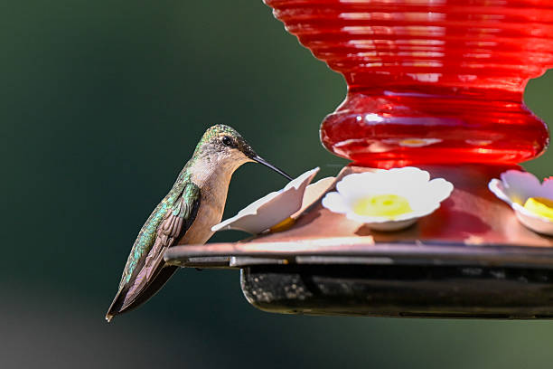
- The feeding opening is designed to fit only the hummingbird’s tongue.
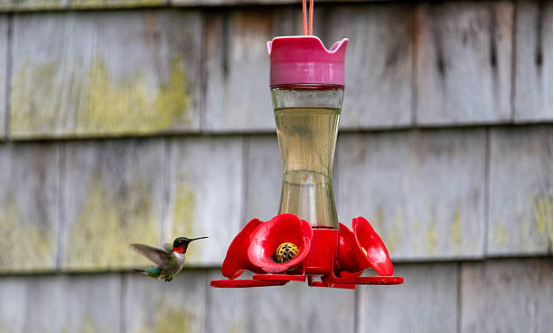
- Prevent bees, wasps, and ants from entering the honey water through the feeding hole.
Common types of hummingbird feeders for preventing ants
Built-in Ant Moat wall-mounted feeder
- Comes with a built-in water tank moat; installation is all it takes to keep ants away.
- Most are equipped with multiple feeding holes and perches, making it suitable for multiple hummingbirds to feed at the same time.
- The sealed design makes cleaning and maintenance easy.
Independent Ant Moat attachment upgrade for traditional feeder
- Suitable for existing feeders, it prevents ants via the sink attachment.
- Flexible and economical, adaptable to plastic, glass, or metal feeders.
- Pay attention to the water level of the moat and the stability of the hanging point.
Sealed and drip-proof + Insect-proof design feeder
- The feeding port is designed with a diameter specifically for hummingbirds.
- The base is sealed to prevent sugar syrup from leaking out.
- Suitable for users who prioritize long-term low maintenance.
Tips for using and maintaining an ant-proof hummingbird feeder
Regular checks and hydration
- The moat tank needs to be refilled every 2-4 days, and more frequently in hot weather or when it is windy.
- Maintain a stable water level to ensure the ant-proof function is effective.
Cleaning feeder
- Thoroughly clean the bottle and base each time you change the honey solution.
- Avoid leaving sugar water residue around the feeding opening and hook.
- Regularly check whether the sealing rings are aging or damaged, and replace them in time.
Reasonable hanging location
- Hang it in a location without easy crawling paths to prevent ants from bypassing the moat.
- Use a smooth lanyard or thin fishing line to reduce the possibility of ants crawling in.
- Avoid placing it near the ground or tabletop.
Observation and Adjustment
- After replenishing water or changing the honey water, observe for 1-2 hours to confirm that the protection is effective.
- If ants attempt to cross the moat, check if the water tank is dry or blocked.
Advantages and limitations of hummingbird feeder (ant repellent)
Advantages
- It deters ants and crawling insects and keeps the sugar water clean.
- Honey water is hygienic and safe, reducing mold and bacterial contamination.
- Easy to maintain, reducing the need for frequent cleaning.
- Hummingbirds become the focus to enhance the viewing experience.
Limitations
- The moat needs to be replenished with water regularly; otherwise, it will become ineffective.
- If the mounting environment is poor, ants may still bypass it.
- Moats have limited effectiveness on flying animals (bees, wasps) and require a specially designed feeding port.
- The small water tank evaporates quickly at high temperatures, requiring frequent checks.
Recommendations for purchasing ant-proof hummingbird feeders
- Choose between a built-in ant moat or a standalone moat attachment.
- Ensure a good seal to prevent sugar syrup from leaking.
- The feeding opening is designed to fit only the hummingbird’s tongue, preventing insects from entering.
- The material is weather-resistant and easy to clean.
- The effectiveness of protection is improved by combining the hanging rope and optimizing the position.
Summarize
- The effectiveness of the ant-proof Hummingbird Feeder relies on three core mechanisms: moat, sealing, and feeding port design.
- A high-quality feeder keeps the honey water clean and prevents insect infestation.
- Routine maintenance and proper placement are key to realizing the value of the ant-proof design.
Combining scientific design with user habits, the Hummingbird Feeder achieves the ideal results of “ant prevention, cleanliness, safety, and long-lasting use.”
Choosing the right ant feeder and using it correctly will protect your hummingbirds and enhance your garden’s aesthetic appeal.