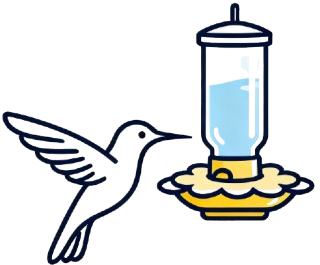
Hummingbird Feeder Cleaning Guide: How often should you clean it for true safety?

Many people encounter the same problem during their first year using a hummingbird feeder.
It’s not about “how to attract hummingbirds,” but rather—how often should the hummingbird feeder be cleaned?
Some say once a week is enough, while others insist on washing every day.
To be honest, giving only one fixed answer to this question would be irresponsible.
The frequency of feeder cleaning is never a “number issue,” but rather a result determined by a combination of environment, temperature, and usage.
In this article, we will explain this matter thoroughly.
Table of Contents
Why is cleaning your hummingbird feeder more important than you think?
An unclean hummingbird feeder is far more harmful to hummingbirds than having no feeder at all.
The reason is actually quite simple.
food.”Sugar water is inherently a “high-risk food”.
The nectar in hummingbird feeders is essentially sugar water.
And sugar water in the natural environment, especially in spring and summer, is very prone to the following problems:
- Fermentation
- Deterioration
- Mold and bacteria growth
Hummingbirds are extremely small with a very fast metabolism, making them highly sensitive to food safety. Even slight spoilage can cause digestive problems and even pose health risks.
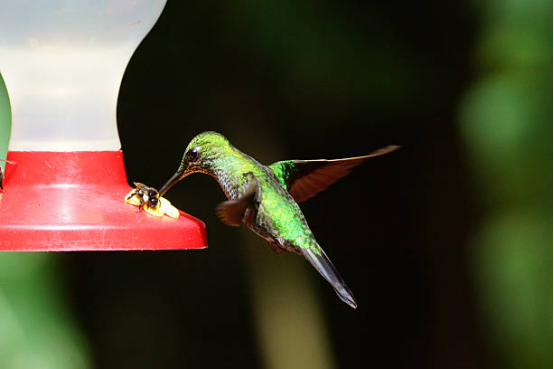
Hummingbirds won’t “tell you in advance” if the nectar is spoiled.
This is a point that many people tend to overlook.
feedersHummingbirds don’t immediately avoid spoiled feeder in the early stages.
By the time you notice they’ve disappeared, the nectar problem has often been going on for some time.
clean butTherefore, cleaning is not just about making things look clean, but about preventing risks in advance.
How often should it be cleaned? The key criteria are here.
If you only remember one sentence from this article, it’s this:
Always prioritize temperature over calendar when deciding on cleaning frequency.
Different temperatures correspond to different cleaning rhythms
Based on the consensus of multiple bird conservation organizations and horticulture guidelines, the following recommendations are made:
- Temperatures below 15°C (60°F)
→ Clean the feeder every 5–7 days - 15 and 25°CTemperatures between 15–25°C (60–77°F)
→ Clean every 3–5 days - Temperatures above 25°C (77°F)
→ must be cleaned every 1–2 days.
The hotter the weather, the faster the nectar spoils; this is an undeniable fact.
“observation.”More important than time is “observation”.
Many experienced hummingbird enthusiasts don’t fixate on the cleaning cycle.
They pay more attention to these details:
- Has the nectar become cloudy?
- Are there any tiny air bubbles?
- Is there a slight odor?
- Is the feeding opening sticky?
If any of these conditions occur, regardless of whether it is time or not, you should clean immediately.
What happens if you don’t clean your hummingbird feeder?
This is a question that many people are unwilling to think about deeply.
Direct impact on hummingbirds
Long-term consumption of spoiled honey may lead to:
- Fungal or bacterial infection
- Abnormal energy intake
- Gradually reduce your visits to your yard
Hummingbirds have a fast-paced life, and problems often arise silently.
Damage to the hummingbird feeder itself
From a long-term usage perspective, neglecting to clean can also cause problems:
- The sugar stains harden and become difficult to remove.
- Feeding hole blockage
- aging of plastic or glass surfaces
The end result is often that the feeder is replaced in advance, rather than “saving trouble.”
Practical steps for properly cleaning a hummingbird feeder
Now, let’s talk about something that can actually be implemented.
Routine cleaning (sufficient in most cases)
- Discard the remaining nectar
- Rinse the inside thoroughly with warm water.
- Use a soft brush to clean the feeding hole and corners.
- Rinse repeatedly to ensure no residue remains.
- Let it air dry naturally before adding new honey.
In most situations, warm water and a soft brush are sufficient.
Do we need to use cleaning agents?
A very clear conclusion:
It is not recommended to use dish soap, bleach, or any scented cleaning products.
If you find stubborn residue, you can choose a gentler approach:
- White vinegar and water in a 1:1 ratio
- Baking soda + warm water
After use, be sure to rinse thoroughly. This step is essential and should not be skipped.
Practical tips to reduce the cleaning burden on hummingbird feeders
Cleanliness is important, but nobody wants to spend all their time washing feeders.
Controlling the amount of nectar used is the first step.
Many people fill the hummingbird feeder all at once, but this is unnecessary.
It’s safer to fill it in small amounts more frequently, depending on how often the hummingbird visits.
Choose the “easy-to-clean” hummingbird feeder design.
When making a purchase, we recommend focusing on the following:
- Fully detachable structure
- The feeding opening is not prone to trapping dirt.
- Wide-mouth design for easy cleaning
A well-designed hummingbird feeder can save you a lot of maintenance time.
Prepare spare feeders for summer
This is what many experienced people do.
While one feeder is being washed and dried,
another is already prepared, allowing for seamless replacement without affecting the hummingbird’s feeding.
Common Misconceptions about Cleaning Hummingbird Feeders
Myth 1: A large number of hummingbirds means there’s no problem.
Not entirely correct.
Hummingbirds do not immediately determine whether nectar has begun to spoil.
Myth 2: Cooler weather means you can relax your cleaning routine.
Even in mild weather, sugar water can still harbor bacteria.
Myth 3: Frequent cleaning will scare away hummingbirds.
As long as the location remains stable, hummingbirds won’t leave just because of cleaning.
On the contrary, a clean feeder makes it easier for them to establish a long-term visiting habit.

FAQ: Frequently Asked Questions about Hummingbird Feeder Cleaning
Q1: Can the feeder be used in a dishwasher?
It’s not recommended. High temperatures and detergents may damage the materials and leave residue.
Q2: Can I use bleach for disinfection?
It is not recommended, as there are still safety risks even after dilution.
Q3: Do I still need to clean the hummingbird feeder in winter?
As long as it is still in use, it is recommended to clean it at least once a week.
Q4: Do I need to wear gloves when cleaning?
Not necessarily, but it’s more hygienic to wear them when the nectar has spoiled.
Q5: How often should the feeder be replaced?
As long as the structure is intact and it is cleaned properly, a feeder can be used for many years.
In conclusion: A clean feeder is the most basic act of goodwill.
Cleaning the feeder may seem like a small thing,
but for Hummingbird, it’s the foundation of safety, health, and trust.
Instead of worrying about whether it’s too frequent, remember this principle:
it’s better to wash once more than to gamble once.
When hummingbirds return to your yard time and time again,
they are actually telling you that this hummingbird feeder is worth their stay.