
A comparison of the cleaning difficulty of glass, stainless steel, and plastic hummingbird feeders.

Hanging a hummingbird feeder in your yard is likely an initial way for many to attract those lively little birds. However, once you start using it, you’ll quickly discover that cleaning is the most troublesome part of daily maintenance. Different feeder materials vary greatly in cleaning and maintenance, directly affecting the hygiene of the honey and the health of your hummingbirds. Today, we’ll compare the cleaning difficulty of glass, stainless steel, and plastic hummingbird feeders to help you choose the most worry-free and safest product.
Table of Contents
Why is cleaning difficulty so important?
You might not realize it, but the nectar in a hummingbird feeder can easily ferment or grow mold if exposed to sunlight or high temperatures. A dirty hummingbird feeder can make a hummingbird sick. This is why the choice of materials directly affects the user experience and safety.
- Glass feeder: Transparent, allowing direct observation of the honey water’s condition.
- Stainless steel/metal feeder: durable but has intricate corners and is difficult to clean thoroughly.
- Plastic feeder: lightweight and easy to clean, making it the first choice for many families.
When choosing a feeder, you should consider not only its appearance and durability but also your cleaning frequency, patience, and the environment of your yard.
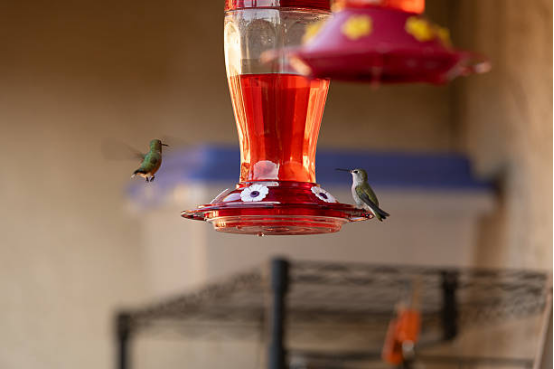
Glass hummingbird feeder: Easy to clean, transparent, and visible.
advantage
- With a smooth, easy-to-clean surface
, the non-porous glass material makes it difficult for sugar residue and mold to hide. It can usually be cleaned by gently scrubbing with hot water or a bottle brush. - The honey water condition is clearly visible through
the transparent glass, allowing you to check at any time whether the honey water has deteriorated or contains impurities. If any problems are found, you can clean or replace the honey water promptly. - High-temperature resistant and sterilizable:
High-quality glass (such as borosilicate glass) can withstand hot water or steam sterilization with virtually no need to worry about cracking or releasing chemicals.
Safe and environmentally friendly
glass does not release harmful chemicals and is safe for hummingbirds and family members.
Precautions
- Fragile; handle with care.
- It is quite heavy and requires sturdy mounting points.
Overall, if you want peace of mind, hygiene, and safety, a glass feeder is undoubtedly a good choice, but daily handling and drop protection are minor issues.
Stainless steel/metal hummingbird feeder: durable but challenging to clean.
Metal feeders are more durable but relatively difficult to clean.
advantage
- Sturdy construction: The metal base and hooks are weather-resistant and suitable for long-term outdoor use.
- Resistant to aging: Not easily deformed by sunlight or temperature differences.
Cleaning problems
- The complex design, flower-shaped water inlet, small screws, and crevices make it difficult to clean.
- Potential rust risk:
If the material is not good enough or the surface treatment is improper, long-term moisture may cause rust, affecting the safety of honey water. - Metal feeders have high thermal conductivity, making it easy for honey water to heat up and ferment in summer.
- Improper cleaning may damage the surface;
excessive force or a hard brush can scratch the metal surface and reduce its rust resistance.
In summary, metal feeders are durable, but cleaning and maintenance require more time and effort.

Plastic hummingbird feeder: Lightweight and easy to clean, the top choice for families.
advantage
- Lightweight and easy to move,
the plastic feeder is very easy to hang up, move, and clean, making it especially suitable for homes or small yards. - Easy to clean,
the high-quality plastic surface is smooth, making it difficult for sugar residue and mold to adhere. Simply brush it with hot water or mild detergent. - breakage
and will not be damaged even if dropped, making it an ideal choice for families with children or pets. - available in a variety of colors and shapes,
are typically available in a range of colors and floral designs, attracting hummingbirds and serving as garden decorations. - are relatively inexpensive compared
to glass and stainless steel, and are easier to buy in bulk or replace.
Precautions
- Avoid prolonged exposure to sunlight, which can cause plastic to age or fade.
- Clean regularly to keep the honey water fresh and prevent mold growth.
In short, if you want easy cleaning, low maintenance, durability, and safety, a plastic hummingbird feeder is the best choice.
User Experience Sharing
Many hummingbird enthusiasts have reported:
- “My glass feeder is beautiful, but I have to be very careful when moving it; the plastic feeder is lightweight and much easier to clean, and I don’t have to worry about the kids knocking it over.”
- “Metal feeders are durable, but cleaning the corners is too much trouble. In the end, I chose plastic feeders, which only need to be scrubbed once a week.”
These real-world examples demonstrate that plastic feeders are more practical for home users who prioritize convenience, hygiene, and durability.
Best practices for cleaning and maintaining a hummingbird feeder
Regardless of the material, proper cleaning methods will make your hummingbird feeder last longer and be safer.
- Clean the container every time you change the honey, especially in hot weather.
- Disassemble all parts and thoroughly wash them, including the feeding port, base, and hanging ring.
- Use warm water or diluted vinegar, and avoid using strong cleaning agents.
- Air dry thoroughly to prevent moisture from causing mold growth.
- Plastic feeders are especially suitable for use with soft brushes to avoid scratching the surface.
- Cleaning and maintaining a plastic feeder is almost the easiest, with no worries about rust or breakage.
Comprehensive comparison: glass, metal, plastic
| Material | Cleaning convenience | Health and safety | Durability | Points to note |
| Glass | Easy to clean, transparent and visible | Non-porous, no chemical residue | Fragile and heavy | Handle with care |
| Stainless steel/metal | Difficult to clean corners | It easily traps dirt and may rust. | Sturdy and durable | Honey water spoils easily in summer and is troublesome to clean. |
| plastic | Smooth surface, easy to clean | Non-porous, low maintenance | Drop-resistant and durable | Avoid prolonged sun exposure and change your honey regularly. |
As the table shows, plastic hummingbird feeders perform best in terms of ease of cleaning, durability, and low maintenance costs, making them particularly suitable for home users and first-time hummingbird keepers.
Which hummingbird feeder would you recommend to whom?
- For beginners/family users: Plastic feeders are the most worry-free, lightweight, easy to clean, and drop-resistant.
- For those seeking aesthetic appeal and transparency, glass feeders are beautiful but require careful handling.
- For long-term outdoor use/emphasizing structural robustness: a stainless steel feeder is feasible but requires significant investment in cleaning and maintenance.
Conclusion
Ease of cleaning is a key indicator of a feeder’s lifespan, honey safety, and hummingbird health. Choosing the right materials and following a scientific cleaning process will ensure your yard hummingbird feeder not only attracts hummingbirds but also becomes a source of enjoyment in your life.
If you’re looking for easy cleaning, low maintenance, durability, and safety, then a plastic hummingbird feeder is almost the ideal choice. While glass and metal each have their advantages, for everyday household use, a plastic hummingbird feeder offers better value and convenience.