The attraction mechanism of hummingbird feeders: a detailed explanation of the scientific principles

coincidence butLet’s get straight to the point: If you’ve ever hung a hummingbird feeder in your yard, you’ve probably experienced that magical moment when “the hummingbird arrives before you even turn around.” This rapid response isn’t a coincidence, but a complex mechanism combining physiological, visual, behavioral, and even evolutionary logic. To help you truly understand why hummingbird feeders are so effective, I’ll break it down for you, layer by layer, from scientific principles and design logic to ecological behavior.
stop atI. Why can’t hummingbirds stop the hummingbird feeder? Let’s start with metabolism.
1. Hummingbirds have an absurdly high energy expenditure—so sugar water is practically their “lifeline.”
exaggeration butHummingbirds are among the birds with the highest metabolic rates on Earth, and this is not an exaggeration, but a survival strategy. Their wingbeats, occurring hundreds of times per second, necessitate a constant replenishment of energy. Scientific research indicates that hummingbirds may consume up to half their body weight in sugar daily.
while.”What does this mean?
— It means they simply cannot tolerate being “starved” or “waiting a while”.
scattered,While natural nectar is diverse, it is scattered; whereas a hummingbird feeder is like a stable, predictable, and readily available energy station. For hummingbirds, it’s like a convenience store: sugar water is always available, and supplies can be replenished at any time.
suck but2. The tongue doesn’t suck, but rather “scoops”—the feeder is perfectly suited to this structure.
liquid andMany people used to think that hummingbirds sucked honey using capillary action, but high-speed images show that hummingbirds’ tongues expand to form a structure similar to a “miniature scoop” after being inserted into liquid, and then retract when they bring the syrup back into their mouths.
This highly efficient foraging method makes the open and easily accessible sugar water in the hummingbird feeder an ideal source of sustenance for them.
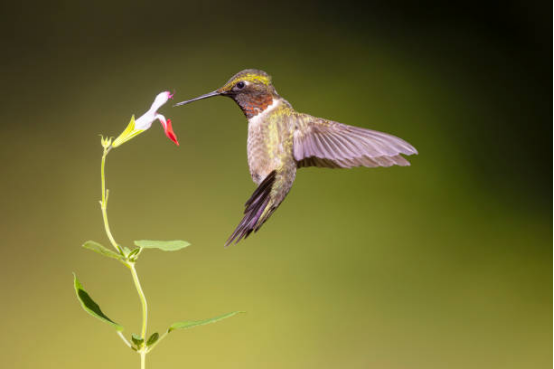
II. Why is the design of the hummingbird feeder just right for hummingbirds?
1. Sugar-to-water ratio 1:4: mimics nectar while protecting the hummingbird’s health.
After long-term observation and experimentation, bird experts unanimously recommend a ratio of 1 part white sugar to 4 parts water.
The reason is:
- Too concentrated: May damage hummingbird kidneys
- Too bland: Cannot meet the needs of a high metabolism.
- Exactly 1:4: Close to the natural concentration of most red tubular flowers.
In other words, this ratio is almost tailor-made for hummingbirds.
In addition, boiling water and sugar can reduce the risk of yeast and mold, making hummingbird feeders safer.
2. Why is the Hummingbird feeder always red?
Hummingbirds are naturally drawn to the color red. Most red flowers provide high levels of nectar, so hummingbirds have evolved to recognize “red” as a reliable signal for nectar sources.
However, please note:
- The sugar syrup itself doesn’t need to be red (don’t add dye!).
- As long as the feeder casing or port is red, it’s fine.
- The harm of artificial pigments to hummingbirds may have been underestimated for a long time.
Therefore, the red shell is a signal, not a reason for the sugar water to stain it.
3. The design of the feeding port, perch, and other features has been validated through natural behavior.
- Small opening: mimicking the shape of a flower corolla, making it easier for hummingbirds to extend their tongues to collect nectar.
- Perching post: Although hummingbirds can hover, standing is more energy-efficient.
- Multiple feeder layouts: Reduce territorial disputes (hummingbirds are highly competitive).
In short, almost every aspect of the hummingbird feeder’s design matches the natural foraging behavior of hummingbirds.
III. Why do hummingbirds frequently visit the hummingbird feeder? You’ll understand after reading this.
1. Feeders are a supplement to, not a replacement for, nectar.
Hummingbirds won’t forgo nectar for sugary syrup; they need:
- Micronutrients in nectar
- Protein provided by insects
- Water and pollen in native plants
.”Therefore, the hummingbird feeder is more like a “gas station . “
What truly keeps hummingbirds coming back is that it fills the gaps in the natural nectar supply.
Especially in:
- Breeding season
- Before and after migration
- In the season of few flowers
The value of the hummingbird feeder is more obvious.
2. Strong territoriality: A single feeder may only be used by the “king” (dominant prey).
Hummingbirds guard their food sources, not out of cuteness, but as a survival strategy.
Therefore, a feeder is often monopolized by the most dominant hummingbird.
Solution:
- Use multiple small feeders
- Make them “invisible” to each other.
- Scattered beside shrubs or tree canopies
This allows weak or young hummingbirds to eat safely.
3. Hummingbirds feel comfortable and safe only when they have shelter and a water source.
Hummingbirds like to quickly retreat into the bushes to rest after feeding.
If the hummingbird feeder is hanging in:
- open space
- Strong wind
- Cat’s accessible location
They will then reduce their visits.
Pairing:
- Water mist nozzle
- Local flowers
- Hanging plants
It can significantly increase the hummingbird’s dwell time.
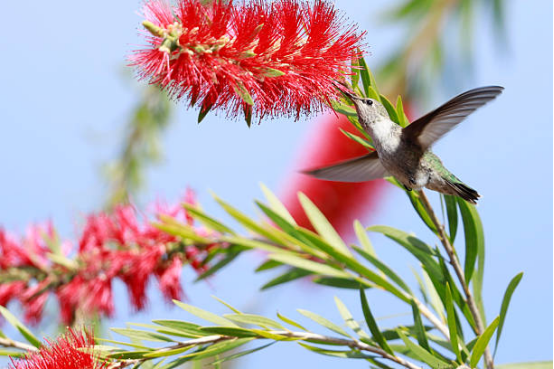
IV. To ensure the Hummingbird Feeder is truly safe and effective, these maintenance risks must be avoided.
—this1. Sugar syrup fermentation problem – this is the most common health risk for hummingbirds.
At high temperatures, yeast may begin to grow in sugar water within 24 hours.
These microorganisms can lead to:
- throat infection
- tongue inflammation
- Difficulty eating or even death
Therefore, it is recommended that:
- High temperature: Change the sugar water daily
- Cool: Change every 2–3 days
- Clean regularly with white vinegar, without detergent.
Dish soap residue is dangerous to hummingbirds; this is something you must remember.
2. Insect disturbance: Ants, bees, and wasps may all compete for the feeding area.
water butThey not only steal the sugar water, but also scare away the hummingbirds.
Solution:
- Choose the hummingbird feeder with an ant moat.
- Use bee guards
- Make sure the feeder doesn’t leak sugar water (bees are extremely sensitive to this).
3. Artificial sweeteners, honey, and fructose syrup are all prohibited.
These ingredients:
- It will ferment quickly
- The nutrition is completely unsuitable for the hummingbird’s needs.
- Potentially causes fatal bacterial infections
The only safe source of sweetness is pure white sugar.
V. Why are hummingbirds so easily “tricked” by hummingbird feeders? Evolution provides the answer.
Saying “being tricked” is certainly a bit of a joke, but evolution has indeed made hummingbirds exceptionally sensitive to certain signals.
1. Pollination Syndrome: Flowers and hummingbirds are co-evolutionary partners.
Many flowers are specifically grown through:
- red
- tubular structure
- High molasses
To attract hummingbirds for pollination.
Hummingbird Feeder perfectly replicates these signals, so it’s naturally effective.
2. Hummingbirds’ bodies are optimized for “eating sugar.”
- Powerful cardiopulmonary system
- A tongue that is extremely efficient at drinking sugar water
- Extremely fast metabolism
- A visual system that evolved to chase flowers
Therefore, when a hummingbird sees a feeder that resembles a flower, it will immediately determine, “This is a high-energy source.”
VI. How to maximize the appeal of your hummingbird feeder? (Practical Guide)
The following suggestions are based on behavioral observations and are closer to natural laws than ordinary tutorials:
1. The ratio of sugar to syrup must be 1:4, and you can’t be lazy and skip the step of changing the sugar.
- Correct: White sugar + water
- Errors: Honey, red food coloring, brown sugar, artificial sweeteners
2. Multiple feeders are more effective than one feeder.
The reason is not just that “hummingbirds eat more,” but also:
- Avoid monopolization by a single hummingbird
- Increase visit rate of vulnerable hummingbirds
- Expand your observation scope
3. Hang the feeder in a “safe but conspicuous” location.
Optimal location conditions:
- There are bushes nearby
- Will not be a cat ambush
- Avoid direct sunlight and sun exposure all day
- Slightly obscured but still visible
4. Enhance attractiveness by incorporating plant arrangements
Planting the following plants that hummingbirds love can create a dual attraction: nature and feeder.
- Red tubular flowers
- Local heat-resistant plants
- Flowering plant groups in four seasons
The combined effect is far stronger than a single Hummingbird Feeder.
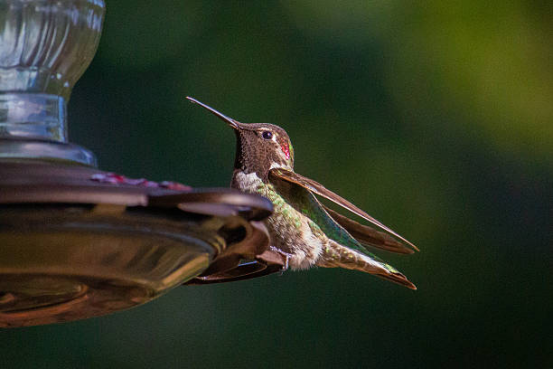
VII. Conclusion: The attraction mechanism of the hummingbird feeder is a result of both science and nature.
When you reconnect the hummingbird feeder, take a moment to reflect:
Hummingbirds don’t come because the “sugar water is sweet.”
They come because:
- High metabolism requires stable supply
- Red visual drive
- Evolutionary association with safflower
- The feeder perfectly simulates natural signals.
- Your arrangement makes them feel safe
—This entire mechanism works simultaneously.
And with a small feeder, you participate in this ancient and exquisite interaction with nature.
If you understand these principles and maintain the yard properly, the hummingbirds will return time and time again, and your yard will become more vibrant as a result.