DIY Hummingbird-Friendly Garden: A Creative and Practical Approach to Hummingbird Feeder

Have you already hung up a hummingbird feeder, only to find that the hummingbirds aren’t visiting as much as expected? Actually, it’s not a problem with the feeder itself, but rather that the environment and setup might not be “friendly” enough. Creating a garden that truly attracts hummingbirds is more than just hanging up a feeder—it requires creativity, patience, and a bit of DIY fun.
I was initially clueless myself, so I just hung up a bottle randomly, thinking the hummingbirds would find it on their own. But after a few days, aside from a few curious visitors, almost none actually stayed. Through observation and adjustments, I developed a practical method: from DIY creative hummingbird feeders and environmental layout to regular maintenance, to making the garden both beautiful and attractive to hummingbirds.
Table of Contents
1. Creative DIY: Make your hummingbird feeder unique
Upcycled Feeder
; otherwise,Actually, many old glass bottles and jars in your home can be transformed into hummingbird feeders. For example, you can quickly DIY a small feeder using a spice jar or jam jar, along with string and a perforated cap.
Tip: The hole should be smooth and without sharp edges, otherwise the hummingbird’s beak may be injured. The bottle opening should be designed to make it easy for the hummingbird to suck up the food, and ideally, it should be removable for easy cleaning.
Materials and Production Steps
rope, andMaterials: glass bottle or small jar, red decorations (plastic sheet or cloth), thin string or hemp rope, drilling tools.
step:
- Clean the bottle and remove the label;
- opening.Drill a few small holes in the cap or modify the bottle opening;
- Use red decorations to attract hummingbirds;
- Hang it with a rope, choosing a slightly high and sheltered but still visible location.
Tip: When DIYing, make sure the structure is sturdy and safe. Do not use dyes or honey to replace sugar solution, as this is bad for the hummingbird’s health.
II. Environmental Setup: Enabling Hummingbirds to “See” the Hummingbird Feeder and Stay.
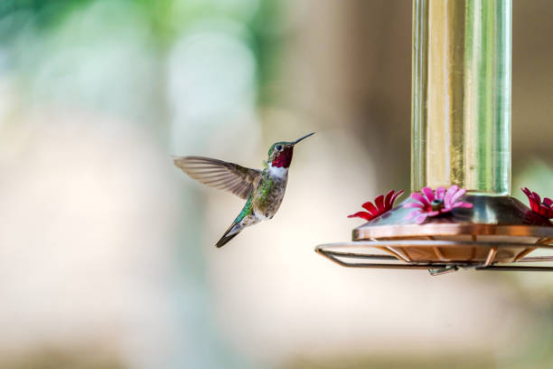
Having a feeder isn’t enough; the environment is equally important. Hummingbirds will choose safe, observable, and comfortable places to stay.
Hanging position techniques
A height of 1.2–1.8 meters is recommended, which is both convenient for observation and makes the hummingbird feel safe.
Avoid direct sunlight, as high temperatures will accelerate the spoilage of the sugar solution.
There should be branches or bushes near the feeder so that hummingbirds can rest or observe their surroundings.
Multi-point layout
; otherwise,If space allows, placing two or more hummingbird feeders, spaced 3–6 meters apart, can reduce competition among the hummingbirds. Occasionally moving the feeder’s location or changing the arrangement of flowerpots can add dynamism, but avoid frequent and significant adjustments, otherwise the hummingbirds may become uncomfortable.
Pair with nectar-producing plants
Feeders are merely resupply points; natural flowers remain the hummingbirds’ preferred source. Plant red or warm-colored flowers near the feeders, such as sage, phlox, or small spider plants. This not only beautifies the garden but also attracts hummingbirds to slowly approach the feeders.
III. Practical Maintenance: Ensuring the Hummingbird’s Health and Hummingbird Feeder Functionality
No matter how well you DIY or how wonderful the environment is, hummingbirds won’t stay long if maintenance isn’t done properly. Safety, hygiene, and stability are crucial for hummingbirds.
Sugar solution formula and replacement frequency
- Standard recipe: 1 part white sugar + 4 parts warm water, which provides energy without being too concentrated.
- High temperatures: Change the sugar solution daily or every other day;
- Mild climate: Change every 2–3 days.
- Replace the sugar solution immediately if it becomes cloudy, foams, or has an off-odor.
Cleaning steps
- detergent.Remove the bottle cap and clean the inner wall and feeding opening gaps with warm water and neutral detergent;
- Soak the stain in a 1:4 diluted vinegar solution to remove any remaining residue.
- Make sure the container is completely dry before adding new sugar solution to prevent mold growth.
Tip: In the high temperatures of summer, place the hummingbird feeder in a shaded area or use reflective materials to cool it down. Glass bottles are more heat-resistant than dyed plastic and also make it easier to observe the state of the sugar solution.
IV. Creative and Practical Combination Solution for Hummingbird Feeder
,By combining a DIY hummingbird feeder , environmental design, and regular maintenance, your garden will truly become a hummingbird paradise. See the following suggested solutions:
- , andDIY a feeder: Use recycled glass bottles, red decorations + hemp rope to hang it.
- observation andSet up two feeding points: one near the window for easy observation, and the other near the edge of vegetation.
- Plant flowers that attract moisture: red sage, butterfly vine, etc.
- Set up resting spots: use branches or small sticks for hummingbirds to perch on.
- Regular maintenance: Check the sugar solution every two days and thoroughly clean the feeder every five days.
- Observation and recording: Take photos to record the number of times hummingbirds visit and the length of time they stay, and adjust the layout and liquid volume as needed.
,When you see the first hummingbird land on your DIY hummingbird feeder , you’ll feel a subtle connection with nature—an invitation to life that you’ve created yourself.
V. Summary
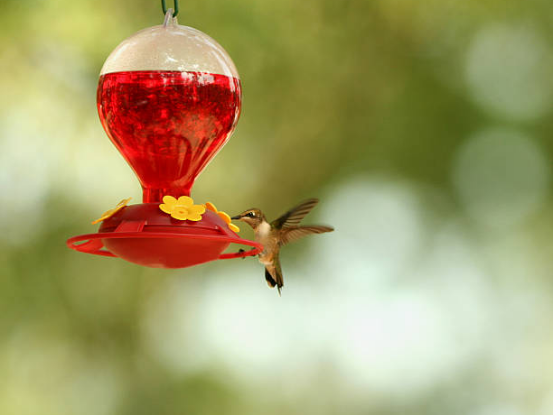
feeders butCreating a hummingbird-friendly garden is not about buying the most expensive feeders, but about combining creativity, environment, and maintenance.
- DIY Hummingbird Feeder: Personalized and cost-effective;
- Environmental design: making it “visible” and “inviting” for hummingbirds;
- Maintenance and management: Ensure the safety of the hummingbirds and the freshness of the sugar solution.
In this way, the hummingbird feeder becomes more than just a garden decoration; it becomes a bridge connecting nature and life. When creativity and practicality are combined, your garden will become a favorite destination for hummingbirds.