Family-friendly activity: The real value of making a hummingbird feeder with your child

nature andA hummingbird feeder is more than just a tool for feeding birds.
When it appears in family life, especially in parent-child interaction scenarios, it often becomes a connection—connecting children with nature, and also connecting parents with children.
Many parents are looking for family activities that are “not so much like education.”
Not classes, not lectures, but activities where you can do things together, wait for the results together, and be moved by a small moment together.
Making a feeder with your child is a perfect example of this.
“understanding.”Table of Contents
Why is the Hummingbird Feeder suitable for family activities?
What makes an event truly popular is not how complicated it is, but whether it can generate continuous interaction.
Feeders are exactly that kind of activity.
It’s not a one-time craft, but a beginning.
What are the advantages of using a feeder for family activities?
- It has a low barrier to entry, so children can truly participate.
- The result is “visible,” not an abstract concept.
- Further long-term interaction, including observation, maintenance, and waiting, is required.
- This can naturally lead to a discussion about ecology and responsibility.
done.”In other words, this is not a project that is “finished once it’s done”.
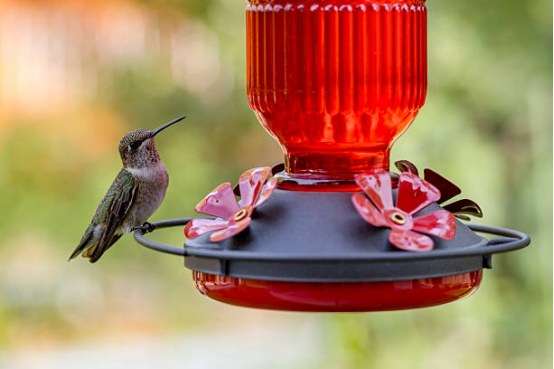
The educational value of making a hummingbird feeder with your child
Authentic training in hands-on skills and creativity
The process of making it is not complicated in itself.
But it’s just right for children.
Cutting, decorating, fixing, assembling—
these steps will make children realize for the first time: “I can actually make something useful.”
In many family settings, children often ask some unexpected questions:
- Will this leak?
- Will the hummingbirds really come?
- Do they like this color?
These questions don’t need standard answers; they are the starting point for thinking.
“understanding.”Natural cognition shifts from “seeing” to “understanding”.
Compared to pictures in books, real hummingbird feeders make it easier for children to understand the logic of nature.
Most children are very excited when a hummingbird first appears.
But what’s more important is what happens next.
The child will gradually realize:
- The hummingbirds don’t come every day.
- Weather changes can affect them
- If you forget to clean, the hummingbirds might not come.
This is a very natural form of causal education, rather than passively receiving knowledge.
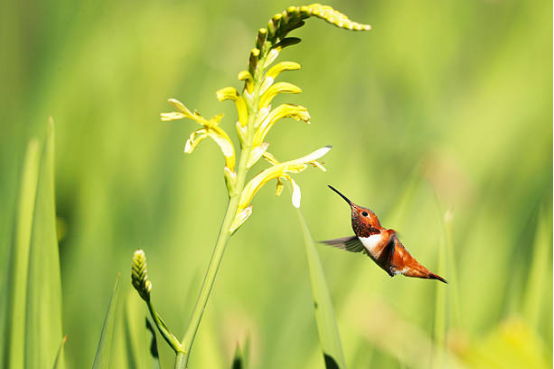
Preparation tips for making a hummingbird feeder at home
Choose safe materials suitable for parents and children.
From a home use and safety perspective, the following materials are most suitable for parent-child scenarios:
- Recyclable plastic bottles or thick glass bottles
- Food-grade feeding mouth or straw assembly
- Non-toxic paints, stickers, or colored tapes
- A sturdy thin rope or hook
These materials are not only safe, but they also help children understand the concept of “reuse.”
Simplify processes and avoid frustration
In parent-child activities, the more complex the process, the easier it is to lose patience.
It’s recommended to keep the hummingbird feeder making process to a few clear steps:
- Wash and dry the container
- Parents assist in completing the necessary drilling.
- The child is in charge of the exterior decoration
- Install feeding port
- Pour in hummingbird nectar
- Choose a suitable location to hang
A sense of accomplishment is more important than perfection.
Once completed: Make Hummingbird Feeder a long-term family project.
Observing hummingbirds is the most natural extension activity.
Once the feeder is hung up, the real parent-child interaction has just begun.
You can do it with your child:
- Record the time when I first saw a hummingbird
- Compare the frequency of occurrence in different time periods
- Observe the impact of weather on hummingbird behavior
These records don’t need to be formal.
Drawings, simple words, photos, or even a single sentence will do.
Maintaining the hummingbird feeder is the beginning of a sense of responsibility.
Hummingbird feeders need to be cleaned regularly.
This isn’t just “housework”; it’s a great educational opportunity.
You can tell your child:
- If not cleaned, the nectar will spoil.
- Hummingbirds may get sick as a result.
- Therefore, we need to take care of it regularly.
When children participate in cleaning the hummingbird feeder, they learn not “rules,” but “relationships.”
The emotional changes brought about by the hummingbird feeder
Many parents have similar feelings after trying it out:
“We didn’t deliberately talk about any grand principles, but it seems easier to communicate now.”
This is because, while waiting together for the hummingbird to appear, adults and children are in the same rhythm.
There was no preaching.
There were no tasks.
We simply observed together.
And the hummingbird feeder just happens to be the medium that exists quietly.
The role of hummingbird feeder in family nature education
From a longer-term perspective, the hummingbird feeder is not the end.
It may raise more questions:
- Where do hummingbirds go in winter?
- What do they rely on for migration?
- What other animals need similar help?
These questions often naturally extend to reading, documentaries, and even outdoor exploration.
And it all started with just a small feeder.
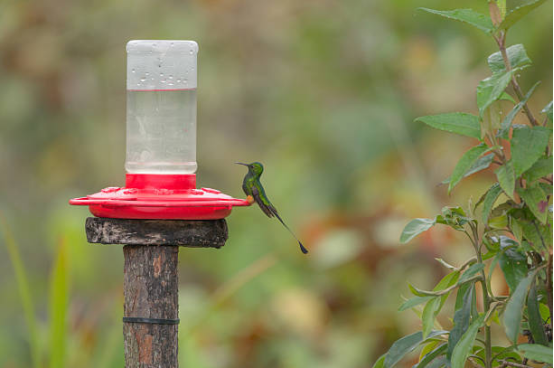
FAQ: Some of the most frequently asked questions by parents
Q1: What age is suitable for children to participate in making feeders?
Generally, children aged 4-5 and above can participate in the decoration and observation activities. It is recommended that parents handle the parts involving tool operation.
Q2: Is it safe to make a feeder at home?
As long as food-grade, safe materials are used and it is done under adult supervision, it is completely safe.
Q3: How often should the feeder be cleaned?
It is generally recommended to clean it every 3–5 days, and more frequently during hot seasons.
Q4: How often do hummingbirds visit?
This depends on the environment and season. Some households see hummingbirds within a few days, while others need to wait patiently.
Q5: Can children make hummingbird nectar together?
Yes, but adults should handle the proportions and heating steps, while children can participate by observing and stirring.
Summary: A simple activity with long-term value.
On the surface, making a hummingbird feeder with your child seems like a relaxing family activity.
But in the long run, it connects:
- Parent-child companionship
- Nature Education
- sense of responsibility
- Emotional exchange
When the hummingbirds no longer appear one day,
the children’s respect for nature and their memories of companionship will quietly remain.
And that hummingbird feeder might stay there forever, a reminder of
what you once waited for together.