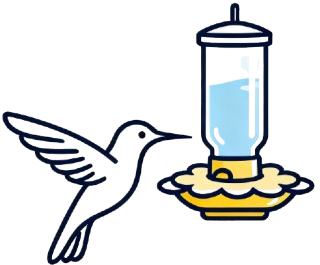
The Science of Attracting Hummingbirds: Hummingbird Feeder Design and Environmental Layout

hummingbirds.Watching hummingbirds gracefully hover around a hummingbird feeder on a quiet morning is a truly unforgettable experience.
But to get hummingbirds to come back often, you need more than just a feeder—you also need some scientific knowledge.
This article will take you through the design of the feeder and the layout of the environment, providing a comprehensive understanding of the principles that truly attract hummingbirds,
and how to create a safe, comfortable, and vibrant “hummingbird paradise” in your own garden.
Table of Contents
I. Scientific Principles of Hummingbird Feeder Design
1. Color: Red is a visual signal, not the only attraction.
Almost everyone is drawn to the “red” label when buying a hummingbird feeder for the first time. Indeed, hummingbirds’ visual systems are sensitive to red light and can quickly recognize this color—but it’s not the only factor.
Research shows that hummingbirds are more concerned with “energy gain”: which feeder allows them to drink more sugary water with less effort.
Therefore, while red parts help attract attention, the design focus remains on the comfort of the feeding opening and the efficiency of feeding.
Imagine if a hummingbird had to painstakingly probe its beak to get food every time it reached for it; it might only visit once or twice before leaving.
Therefore, an ideal hummingbird feeder design should possess the following characteristics:
- Open or shallow design for easy eating;
- Bright but not overly decorated red details (avoid too much yellow to avoid attracting bees);
- The feeding opening is smooth and rounded to prevent damage to the hummingbird’s tongue.
2. Material: Glass or plastic?
is regardlessMany experienced bird lovers prefer glass feeders because they are easier to clean, less prone to odor absorption, and more durable.
While plastic is lightweight and inexpensive, it is susceptible to aging and deformation after exposure to sunlight.
The choice depends on how much time you’re willing to dedicate to maintenance.
The key is: regardless of the material, ensure it’s easy to disassemble and clean.
3. Insect-proof design: Details determine whether hummingbirds will stay long.
guests.”A good hummingbird feeder not only attracts hummingbirds but also keeps out “other guests”.
- We recommend choosing a model with an ant-proof sink.
- netting.It would be even better if the feeding inlet had a bee-proof netting;
- The chassis structure should be well sealed to prevent sugar syrup leakage.
These small details can significantly improve the user experience. After all, once a hummingbird is “occupied” by bees or ants, it will immediately leave.
II. Nectar Recipe: The Golden Rule of Hummingbird Feeder Nectar Ratio
isHummingbirds have an extremely high metabolism, requiring nearly twice their own body weight in energy daily.
The nectar (sweet water) they are fed must be prepared with a precise ratio. The standard ratio is:
- 1 part white sugar + 4 parts water
- Stir until completely dissolved. It sounds simple, but don’t overlook the following points:
- sweeteners.Never add honey, red dye, or artificial sweeteners;
- residues.Use clean containers and filtered water to avoid chemical residues;
- In hot weather, change the sugar water once a day to prevent fermentation.
Here’s a little tip: If your hummingbird feeder is often in the sun, consider portioning out small amounts of sugar syrup and changing it frequently to avoid waste.
This is more hygienic and helps maintain the hummingbird’s health.
III. Environmental Layout: A Decisive Factor in Hummingbird Feeder Placement
1. Placement location: visible, safe, and stable.
isMany people ask, “I bought the best hummingbird feeder, but the hummingbirds just won’t come.”
The problem often lies in the placement. Hummingbirds have a strong need for space and a sense of security.
The correct approach is:
- ground.Hang the hummingbird feeder about 1.5 meters above the ground;
- Ensure that you can quickly escape when a hummingbird flies close (it is best to have branches nearby for roosting);
- sunlight.The environment should be partially shaded to prevent the sugar water from spoiling due to exposure to direct sunlight;
- Try to place them near flower bushes or windows so they are easy to spot.
You can observe the hummingbirds’ flight paths for a day or two and then adjust your location accordingly. A change of just a few centimeters can sometimes significantly increase visitor rates.
territory.”2. Avoid “monopolizing territory”
isHummingbirds are very territorial. If you only hang one feeder, you’ll often see one hummingbird “waiting by for food,” driving away other hummingbirds.
Therefore, the best method is:
- ;Prepare 2–3 hummingbird feeders ;
- They were hung in different corners, 3–6 meters apart;
- visible butEnsure that each feeding point is visible, but not on the same flight path.
- This arrangement allows more hummingbirds to take turns feeding, avoiding fighting.
3. Vegetation arrangement: Creating a natural refueling station
The hummingbird feeder is an artificial feeding station, but flowers are their actual food source.
To encourage more frequent visits from hummingbirds, plant the following plants around the feeder:
- Salvia;
- Snapdragon;
- Penstemon;
- Various red or orange flowering plants.
These plants not only provide nectar but also make the environment more natural and layered. Hummingbirds like to rest in sheltered places, so some shrubs or small trees of varying heights are also very important.
IV. Hummingbird Feeder Use and Cleaning: Key to Maintaining a Healthy Ecosystem
One often overlooked fact is that an unclean hummingbird feeder is worse than having no feeder at all.
Fermented sugar solutions or mold growth can directly damage a hummingbird’s digestive system.
Cleaning recommendations are as follows:
- Check the sugar solution every 2–3 days to see if it becomes cloudy or has bubbles;
- brush.Clean the feeding inlet and bottle walls with warm water and a small brush;
- Avoid using strong detergents; if necessary, soak the item in a 1:4 ratio of vinegar and water.
- After drying, refill with new sugar syrup.
If you live in a hot region, such as Southeast Asia or the coast of South America, you should increase the frequency of cleaning.
Keeping your hummingbird feeder clean is the truly responsible thing to do.
5. Why do hummingbirds sometimes just not come?
Many beginners wonder, “My hummingbird feeder is beautiful, and the sugar water is perfect, so why can’t I see any hummingbirds?”
Actually, this isn’t uncommon. Common reasons include:
- The feeder has only been up for a short time (hummingbirds need a few days to adapt).
- There were few nectar-producing flowers nearby, so the hummingbirds didn’t notice it.
- The sugar solution has gone bad and tastes wrong.
- noisy,The environment is too noisy or there are predators.
- If you encounter this situation, you can try:
- Move the hummingbird feeder to a location with softer light.
- Plant a few brightly colored flowers as a guide;
- Observe the time of day when hummingbirds are most active;
- Avoid spraying chemical pesticides or strongly scented cleaning agents.
Hummingbirds typically remember the location of the hummingbird feeder after one or two weeks—their memory is amazing, and they can even revisit the same hummingbird feeder months later.
VI. Conclusion: A Hummingbird Feeder Experience Where Science and Aesthetics Coexist
Creating a successful hummingbird feeder system is essentially a collaboration between humans and nature.
You need to understand the physiological characteristics of hummingbirds and know how to create an environment that they “want to stay in.”
Finally, let me summarize a few key points for you:
- The color is attractive, but feeding efficiency is more important.
- The nectar ratio should be controlled at 1:4; do not add dye.
- Maintain a safe distance in the layout and feed at multiple points;
- Clean regularly to keep the sugar solution fresh;
- Combined with nectar-producing flowers, a complete ecosystem is created.
When you carefully design and maintain this system, you’ll find that hummingbirds will reward you with their company throughout the summer.
Their graceful figures, shimmering feathers, and rapid wingbeats will bring your yard to life.