Hummingbird Feeder: A practical maintenance tool for preventing ants and wasps.

If you’ve been using a hummingbird feeder in your yard for a while, you’ve probably encountered a similar problem:
fewer and fewer hummingbirds are coming, while more and more ants and wasps are appearing.
This isn’t your fault.
In fact, most hummingbird feeders were designed with “feeding efficiency” in mind rather than “intrusion prevention and maintenance.” When sugar water is exposed to the air, the smell spreads, and combined with the high temperature, ants and wasps practically “come at the scent.”
Table of Contents
Why do hummingbird feeders attract ants and wasps so easily?
Before discussing tools, it’s important to quickly understand the root of the problem.
Sugar water exposure is the fundamental reason for attracting insects.
The hummingbird feeder uses a high-sugar-concentration sucrose solution.
For hummingbirds, this is a high-energy food;
for ants and wasps, it is a natural energy source.
pathway.”Even if only a single drop of sugar water seeps out, insects can quickly establish an “olfactory pathway”.
structure.”Most hummingbird feeders do not have a complete “protective structure”.
Many products are labeled “bee-proof” or “ant-resistant,” but in actual use:
- Ant-proof structure discontinuous
- The seal fails after aging.
- The feeding opening is designed to be large enough that wasps can enter directly.
All of these factors cause the hummingbird feeder’s protective capabilities to decrease significantly after a period of use.
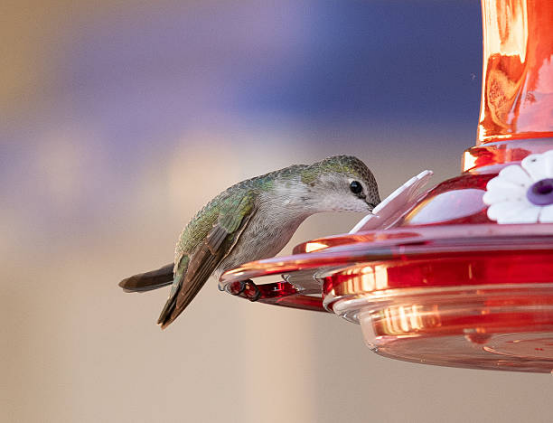
Hummingbird Feeder: A practical tool for preventing ants.
Of all intruders, ants are the most common and the most easily overlooked.
The good news is that they are also the easiest to deal with using tools.
1. Ant Moat (Ant-proof Sink) – Basic but Essential
This is the most stable and cost-effective tool for hummingbird feeder ant protection.
The working principle is simple:
a small water tank is placed above the feeder, preventing ants from crossing the water surface.
User experience reminder:
- Water needs to be replenished regularly (it evaporates very quickly at high temperatures).
- soap;Do not add sugar or dish soap, just add water.
- The location must be between the feeder and the hanging point.
Many people think Ant Moat is “too basic,” but the reality is that
it can solve 90% of ant-related problems.
2. Grease barrier tool (suitable for fixing brackets)
If your feeder is mounted on a fixed bracket instead of being suspended, you might consider:
- Food-grade silicone ant-repellent coating
- Removable anti-ant ring
surfaces.”They disrupt the ants’ path by creating “unclimbable surfaces”.
Note:
Do not apply grease directly to the feeder body; use it only on the stand or hook area.
Hummingbird Feeder: A Key Tool for Wasp Control
Compared to ants, wasps pose a greater and more complex threat.
food butThey not only steal food, but may also drive away or even harm hummingbirds.
1. Bee Guard (Wasp Feeding Port) – The most direct and effective
Bee guard is a protective component designed specifically for hummingbird feeders:
- Smaller feeding orifice
- Hummingbirds can extend their beaks to enter
- Wasps cannot fully enter
These tools do not affect the hummingbird’s feeding habits, but they can significantly reduce the time wasps spend at the same time.
After a week of use, noticeable changes can usually be seen.
2. Yellow Part Replacement Tool – An Easily Overlooked Little Detail
This is a seemingly insignificant but highly effective adjustment.
Wasps are highly sensitive to the color yellow.
And many hummingbird feeders happen to use yellow feeding ports or decorations.
The solution is simple:
- Replace with red feeding port
- Or use a red protective shield
Many users have reported that this single adjustment has reduced the frequency of wasps by more than half.
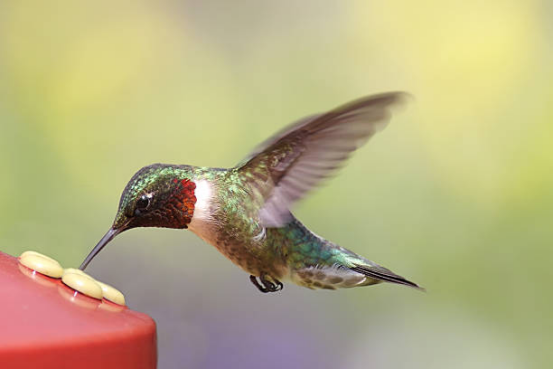
Besides ant and wasp repellent, these are easily overlooked auxiliary maintenance tools.
the HummingbirdIf you want to use Hummingbird Feeder stably in the long term, these tools are also worth considering.
Metering dispenser (to prevent sugar syrup from overflowing)
The overflow of sugar water is the starting point of all problems.
Using a graduated metering dispenser, you can:
- Precise control of water level
- Avoid pressure overflow
- Reduce odor diffusion
important.”This is a tool that “seems unrelated to insect control but is actually very important”.
Specialized cleaning brush (for maintenance and protection)
A blocked feeding opening forces hummingbirds to stay longer and gives wasps more opportunities.
Recommended equipment:
- feeding mouth brush
- Inner wall soft bristle brush
Keeping the feeder running smoothly is itself a form of protection.
Common Mistakes: These “Home Remedies” Actually Harm the Feeder
risky.”In actual maintenance, we often see practices that “seem effective but are actually risky”.
- Spray insecticide on the feeder
- Add preservatives to sugar water
- Use strong-smelling insect repellents
These methods will either:
- Damaged hummingbird feeder material
- It could affect the hummingbird’s health.
- term orIt’s either effective in the short term, or worse in the long term.
Tool-based, structured solutions are always superior to chemical methods.
Hummingbird Feeder Pest Control and Maintenance Recommendations (Practical Solutions)
If you don’t want to repeatedly try and fail, you can directly refer to the following combinations:
Suspended feeder
Ant moat + Bee guard + Red feeding port
Stand-up feeder
Ant ring + Bee guard + metered water dispenser
This is currently the combination method with the most stable feedback and the lowest maintenance cost.
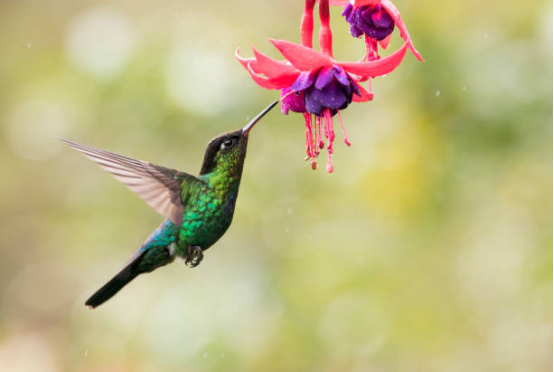
FAQ: Frequently Asked Questions about feeders for ant and wasp prevention
moatsQ1: Will an ant moat affect hummingbirds’ feeding?
No. Ant moat and ant rings only target ant paths and do not come into contact with hummingbirds.
Q2: Will the bee guard cause hummingbirds to become uncomfortable?
Most hummingbirds adapt after 1-2 tries, especially small-beaked varieties.
Q3: How often should I check my protective gear?
It is recommended to check it quickly once a week, but this can be shortened to 3–4 days during hot seasons.
Q4: Is it necessary to protect against both ants and wasps simultaneously?
Yes. Their behavior patterns differ, requiring different tools to work together.
In conclusion, maintaining a hummingbird feeder is actually a “long-term relationship.”
item butA feeder is not a disposable item, but a medium through which you connect with nature.
The purpose of preventing ants and wasps is not to “fight insects.”
but to provide hummingbirds with a stable, safe, and undisturbed feeding environment.
When you choose the right tools and maintain them properly, you’ll find that
hummingbirds come more frequently and stay longer, and the whole garden slows down.
And that is precisely the reason for the existence of the hummingbird feeder.