Hummingbird Feeder Arrangement Guidelines for School and Community Gardens

Placing hummingbird feeders in school and community gardens not only enlivens the environment but also offers educational and ecological benefits. For students and residents, it provides an opportunity to observe nature up close and learn about ecological interactions. Imagine students watching nimble hummingbirds sipping syrup beside a trellis—an experience far more engaging and memorable than classroom instruction. This article will share specific placement plans, plant combinations, maintenance strategies, and practical tips for overcoming challenges, ensuring your garden truly becomes a hummingbird-friendly space.
I. Why it is important to set up Hummingbird Feeders in school and community gardens
Setting up a hummingbird feeder is not just about beautifying a space; it has a deeper meaning:
1. Environmental Education and Interaction
School gardens are excellent outdoor classrooms. Through hummingbird feeders, students can observe hummingbird behavior and understand their relationship with flowers and plants. Participating in cleaning and watering also fosters a sense of responsibility. Imagine children gathered around the flower trellis discussing, “Why do hummingbirds like red flowers?”—this experience is far more profound than simply teaching ecology.
In addition, making a hummingbird feeder can be a group activity: students design and build it themselves and then place the feeder in the campus ecological planning. This kind of hands-on and observation-based activity has a very good teaching effect.
2. Support local biodiversity
Hummingbirds are star visitors to urban gardens and community green spaces. Gardens can become ideal resting or breeding grounds for them, thanks to the extra energy provided by hummingbird feeders. But remember: feeders are only a supplement to their food source and cannot replace native plants. Ideally, feeders should be integrated with native plants that attract hummingbirds to maintain a complete ecosystem.
3. Aesthetics and Visual Experience
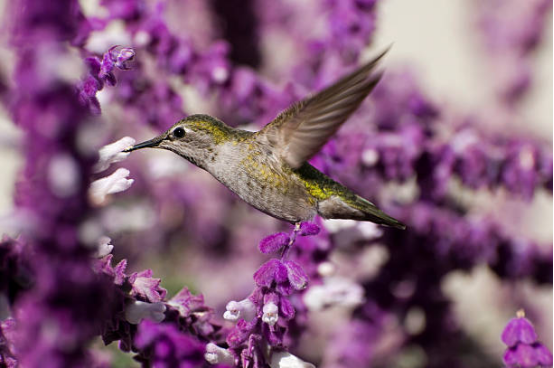
Hummingbirds are agile and swift fliers; the soft buzzing sound of their wings as they visit flowers, along with their brightly colored feathers, is very eye-catching. In school or community settings, people can regularly observe these little creatures up close, fostering a closer interaction between people and nature.
II. Choosing the right Hummingbird Feeder
In school and community gardens, feeders not only need to be aesthetically pleasing but also easy to maintain and safe. Here are a few options:
1. DIY and eco-friendly feeders
- A simple bottle feeder can be made by hanging an empty glass bottle (such as a soy sauce bottle) upside down. Epic Gardening suggests that restaurant-style glass bottles with double spouts are very practical and can also be used as group projects for students.
- customizable
cover is both practical and crafty, making it perfect for school group activities. Students can decorate the feeder themselves, increasing their participation. - Artistic or clustered designs
can utilize hanging baskets, old branches, or metal chandelier frames to combine multiple small feeders, making them convenient for hummingbirds to use and adding more interest and decorative appeal to community gardens.
2. Commercial feeders
If your budget allows, choosing a specially designed hummingbird feeder will save you a lot of trouble.
- with bee-proof structures
, there may be bee disturbances. You can choose a bee guard or a feeder with a wider base. - The capacity and materials
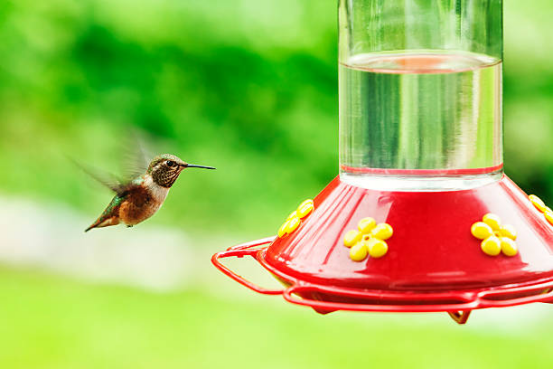
are both good, such as glass and durable plastic, like the Woodlink copper-topped glass feeder, which is easy to clean and sturdy. - To prevent a single hummingbird from monopolizing a feeder,
it is recommended to set up multiple hummingbird feeders and keep them out of each other’s sight.
III. Hummingbird Feeder Deployment Strategy
A good location arrangement directly affects the frequency of hummingbird visits while also taking into account aesthetics and safety.
1. Location Selection
- near vegetation, but not too densely,
about 3–5 meters from the shelter (tree or shrub), so that the hummingbird can escape quickly. - Provide partial shade
to avoid direct sunlight, otherwise the syrup will easily spoil. Choose a semi-shaded area near the branches. - Keep away from windows
to avoid hitting the glass, a distance of approximately 4.5–6 meters is recommended. - The ideal height
is 1.2–1.8 meters above the ground, which avoids predators such as cats and makes it easy to replenish sugar water.
2. Multi-point layout
- To reduce competition
, if the enclosure is large or there are many hummingbirds, it is recommended to set up multiple hummingbird feeders. The key is to keep them out of each other’s line of sight. - The hummingbird corridor
is equipped with multiple hummingbird feeders and combined with flower beds, bird perches, and small trees to form a path for hummingbird activity, allowing observers to appreciate the birds from different angles.
IV. Integrating Plants and Ecological Arrangements (hummingbird feeder)
1. Plant plants that attract hummingbirds.
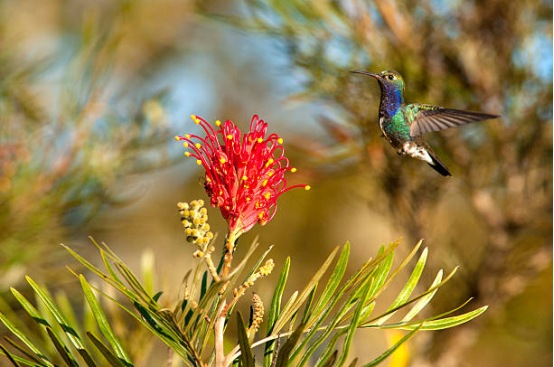
Prioritize local red, tubular (funnel-shaped) flowers to attract hummingbirds. Combine with vines, shrubs, and small trees to create vertical trellises and resting spots.
2. Provide water source
Besides sugar water, hummingbirds prefer light mist or shallow water, and a sprayer, a shallow water basin, or water-filled leaves can all meet their needs.
3. Safe habitat
Place branches or small trees near the feeder to provide a safe resting place. This also reduces pesticide use and ensures ecological safety.
V. Maintenance and Management
1. Regular cleaning
Feeders are prone to mold and bacteria growth. It is recommended to clean them with warm water or diluted vinegar, rinsing thoroughly after each use. In hot weather, cleaning every two days is most effective.
2. Replenish with sugar water
The sugar-to-water ratio is 1:4, with no artificial coloring added. The replenishment frequency is adjusted according to visitor volume and temperature.
3. Controlling bee disturbances
a hummingbird feeder with bee protection devices, and avoid placing it too close to the flower bed to reduce bee disturbance.
4. Safety and Education
Schools can arrange for students to take turns maintaining the hummingbird feeder and keep observation logs to record hummingbird visitors and behavior. This not only facilitates science learning but also enhances student engagement.
VI. Specific Layout Example
Option 1: Corner of the school garden
- Location: Close to outdoor classrooms, but away from windows.
- Structure: Two hummingbird feeders are hung on a small flower stand to create a visual focal point.
- Plant: Red or orange tubular flowers; water is provided by a sprayer.
- Education: Students take turns cleaning and refilling water and record access data.
Option 2: Multiple locations within the community garden
Three feeding stations:
- A: Near the bushes, a glass commercial feeder.
- B: Public paths, DIY feeders, bright decorations, and educational signs.
- C: Children’s area, wide-disc commercial bee feeder.
- Plants and Ecology: Local flowers attract hummingbirds, and small trees provide resting spots.
Maintenance: Volunteers regularly check, clean, rehydrate, record visit information, and share observations via bulletin board.
VII. Potential Challenges and Solutions
- Maintenance difficulties: Establish a shift system and a simple checklist.
- Bee interference: Use a hummingbird feeder, keep it away from the flower bed, and clean it regularly.
- Hummingbird Domination: Multiple locations and providing concealed branches.
- Limited budget: Promote DIY feeders and community fundraising.
VIII. Summary
Designing hummingbird feeder placement schemes in school and community gardens can promote ecological education and beautify the environment. By choosing appropriate feeders, scientifically placing them, and combining them with local plants and maintenance mechanisms, a hummingbird-friendly and sustainable garden can be created.
Tip: First, draw a layout of the park, mark the hummingbird feeder points, and discuss the maintenance plan with teachers, students, and residents. This will ensure long-term operation and allow everyone to participate, bringing hummingbirds into the green community.