How to improve hummingbird visit rate by incorporating plant layout in Hummingbird Feeder

Many bird enthusiasts, when setting up hummingbird feeders, often focus only on the feeder itself, neglecting the importance of the surrounding plants. In fact, a well-designed combination of feeders and plants can not only beautify the garden but also significantly increase the frequency of hummingbird visits. This article will provide actionable suggestions from four aspects: garden design, plant selection, feeder placement, and daily management, making your garden an ideal “stopping spot” for hummingbirds.
I. Plants and Hummingbird Feeders: Why They Must Be Combined
1. Natural food sources and energy replenishment
While hummingbird feeders can provide quick energy (often from sugar water), native plants offer a more natural and stable source of nectar. According to Audubon, using native plants not only ensures a continuous nectar supply but also increases insect diversity, providing hummingbirds with a richer ecological habitat.
Interestingly, some hummingbirds even prefer flowers to feeders—after all, they have evolved preferences for specific flower shapes and colors. So, if you only hang feeders without suitable plants, it may be difficult to attract hummingbirds in the long run.
2. Safe rest areas and micro-habitats
A garden with only a hummingbird feeder might see the birds come once and then fly away. WildBirdScoop experts recommend planting shrubs, small trees, or vines around the feeding area. These not only provide shelter but also serve as safe resting spots for the hummingbirds—to escape predators or rest while waiting for their next feeding opportunity.
In addition, considering vertical space is also crucial. By using climbing plants, trellises, or small trees, rich layers can be created, allowing hummingbirds to freely switch between foraging and resting, rather than constantly searching for suitable spots on a flat surface.
3. Extend the flowering period and continuously attract hummingbirds.
The short flowering period of a single type of flower can easily cause hummingbirds to be unable to find nectar for a period of time. By using plants with staggered flowering periods (early spring, summer, and late season) in combination with a hummingbird feeder, hummingbirds can be guaranteed a sufficient food source throughout the season.
In addition, forming flower clusters—that is, planting more than three of each type of plant—creates highly visible nectar hotspots, making it easier for hummingbirds to find and stay.
II. How to design plant layouts to increase hummingbird visitation rates
1. Layout principles: layering, group planting, and color guidance
- Layered design: Arrange tall and short plants in layers, with tall trees or shrubs at the back and low perennials in the front, which not only creates visual appeal but also provides flight paths and rest areas.
- Group planting: Grouping the same plants together (3–5 plants) increases nectar density and makes it easier to attract hummingbirds.
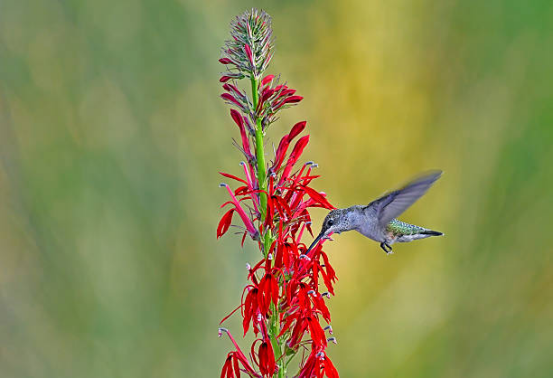
- Color Guidance: Hummingbirds prefer brightly colored tubular flowers in red, orange, pink, and purple. You can use color blocking to create visual focal points, guiding hummingbirds deeper into the garden.
2. Utilizing vertical structures
- Climbing and climbing plants, such as trumpet vine or honeysuckle, which climb along trellises, provide vertical richness and allow hummingbirds to move freely in the vertical space.
- Container plants: In balconies or small courtyards with limited space, perennials such as fuchsia or salvia can be grown in pots or hanging baskets to create small “hummingbird corners.”
3. Provide water sources and refuge areas.
- Water source: Hummingbirds prefer water mist or fine water droplets. Install small sprayers or drip systems so that hummingbirds can drink or bathe.
- Refuges: Use shrubs, small trees, or trellises to provide temporary resting places for hummingbirds so they can rest between flights.
III. Recommended local plants that hummingbirds like
Choosing plants that suit the local climate and the preferences of hummingbirds is crucial. The following are some ideal varieties to pair with a hummingbird feeder:
Trumpet Honeysuckle (Lonicera sempervirens)
has red tubular flowers that are very attractive to hummingbirds and are suitable for climbing trellises or fences.
Cardinal Flower (Lobelia cardinalis)
has tall, red, bell-shaped flowers that are rich in nectar and are often used in flower beds or wet areas.
Monarda (Bee Balm / Wild Bergamot)
has reddish-purple flowers that are very popular with hummingbirds and are suitable for planting in groups.
Penstemon (Beardtongue)
is a tubular flower, a perennial, drought-tolerant plant, suitable for flower beds or pots.
Fuchsia
is a hanging bellflower, suitable for hanging baskets or containers, and works exceptionally well with feeders.
- Other options include columbine, trumpet vine, and scarlet sage, all of which are favorites of hummingbirds.
IV. Properly arrange the hummingbird feeder
Plants alone are not enough; the arrangement of the hummingbird feeder is equally important:
1. Multiple feeding points
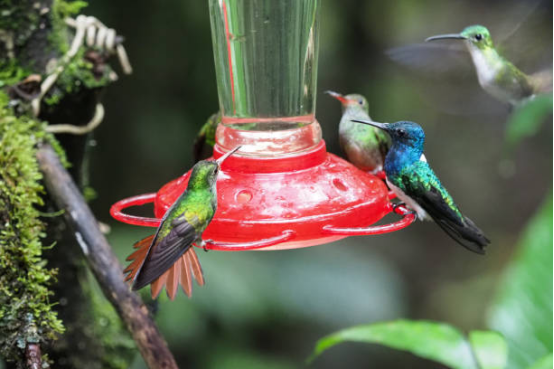
- It is recommended to set up multiple hummingbird feeders to prevent one hummingbird from “monopolizing” a feeding spot.
- The feeders are spaced about 4–5 meters apart and placed at different heights to give the hummingbirds a choice.
- This not only prevents competition but also allows the feeder to blend naturally into the plant community, rather than becoming an isolated “sugar water station”.
2. Feeder location and shade
- Partial shade can prevent direct sunlight and keep the sugar water from spoiling.
- It’s best to have branches or bushes near the hummingbird feeder so that the hummingbird can take off and land freely.
3. Cleaning and Maintenance
- Regular cleaning: Dirty feeders can breed mold, which is harmful to hummingbirds.
- Sugar syrup ratio: It is recommended to use four parts water to one part sugar (4:1), and change it once a week.
- Avoid pesticides: Minimize the use of pesticides in the plant area to protect both the hummingbirds and the quality of the nectar.
V. Practical Implementation Suggestions: Case Studies and Strategies
Case 1: Conventional backyard garden
- Overall layout: A hummingbird corner is planned at the back of the garden, with a tall tree in the center providing branches, and trellis supporting the trumpet vine around it.
- Group planting: Plant 3-5 plants of each of the following species on both sides of the trellis: Penstemon, Bee Balm, and Cardinal Flower.
- Hummingbird feeder arrangement: Hang one next to a small shrub and another high up on a trellis, providing a multi-layered option.
- Water source: A small mister maintains a water mist for the hummingbirds to drink and bathe in.
- Maintenance: Check the feeder weekly, prune the plants, and encourage flowering.
Case 2: Balcony/Small Space
- Container usage: Potted Fuchsia, Salvia, Penstemon, placed against a wall or railing.
- Vertical structure: Hummingbird vines climbing on trellises or railings.
- Feeder setup: Hang a small hummingbird feeder with red accents so that the hummingbird can fly directly to nearby plants after drinking.
- Water source: small shallow dish or spray bottle, providing water mist at regular intervals.
- Observation and Adjustment: Record the flowering status of plants and the preferences of hummingbirds, and adjust the layout based on observations.
VI. Summary
- Core concept: Deeply integrating hummingbird feeders with suitable local plants to create food sources, resting places, and safe zones is key to increasing hummingbird visitation rates.
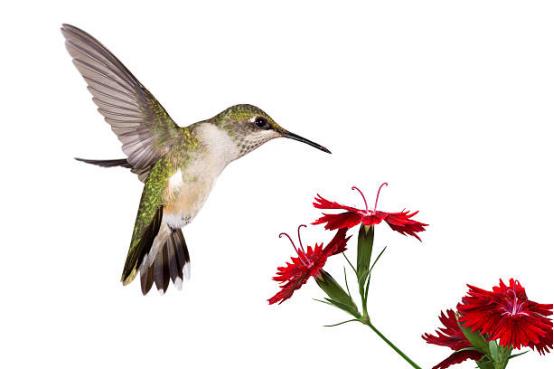
- Plant selection: Red tubular flowers (such as trumpet honeysuckle, cardinal flower, penstemon, bee balm, etc.) are the most popular, and the best effect is achieved by using a combination of mass planting, layering, and color zoning.
- Feeder setup: Multiple hummingbird feeders at different heights, partially shaded, and with natural resting spots to allow hummingbirds free access.
- Routine maintenance: Clean the feeder regularly, replenish the sugar water, and avoid using pesticides. Observe the hummingbird’s behavior and adjust the position of the plants and feeder according to the actual situation.
With a well-planned plant arrangement and hummingbird feeder setup, your garden or balcony can become a “must-visit” spot for hummingbirds, allowing you to enjoy birdwatching up close with nature.