Can you feed hummingbirds in winter? Feeding tips for hummingbirds in cold weather.

As temperatures drop, many family birdwatchers wonder: can we still feed hummingbirds in winter? Actually, even in cold weather, a properly set-up hummingbird feeder can still attract hummingbirds. However, this requires some special techniques and precautions to ensure the hummingbirds’ safety, the freshness of the feeder, and to minimize the risk of the feeder freezing.
Table of Contents
Overview of Hummingbird Winter Behavior
Hummingbirds are birds that rely heavily on sugar, and they still need energy to maintain their body temperature during the cold season. However, food is scarce in winter, especially in northern regions, and natural flowers are scarce, so hummingbirds may reduce their activity or even migrate.
- Migratory hummingbirds: Hummingbirds in some areas migrate to warmer southern regions.
- Resident birds: In temperate climates, some hummingbirds will stay, and your hummingbird feeder can become an important source of energy.
- High metabolic characteristics: Hummingbirds have extremely high energy consumption and need to be replenished with sugar water frequently.
Therefore, if you live in an area with a mild climate, feeding your hummingbirds in winter is not only feasible but can also help them survive the winter safely.
The main challenges of winter hummingbird feeder
Feeding hummingbirds in winter presents some unique challenges:
- Sugar water freezes: Low temperatures will cause the sugar water in the feeder to freeze quickly, making it unusable for the hummingbird.
- Sugar water spoilage: Frequent low-temperature and high-humidity environments may cause sugar water to become contaminated.
- Feeder damage from freezing: Plastic or glass feeders are prone to cracking in cold environments.
- Reduced visit frequency: Hummingbird activity decreases when temperatures are too low, so it is necessary to properly arrange hummingbird feeders.
Solving these problems requires specific feeding strategies and equipment selection.
Hummingbird feeder selection in cold weather
Choosing a feeder suitable for winter is the first step to successful feeding.
- Small-capacity hummingbird feeder: 10–12 ounces is ideal; avoid putting too much sugar water in at once, as it will freeze.
- Cold-resistant materials: Glass or thick plastic are more resistant to low temperatures and less prone to cracking.
- Easy to clean: Sugar water is prone to crystallization or mold in winter, so an easy-to-clean design is crucial.
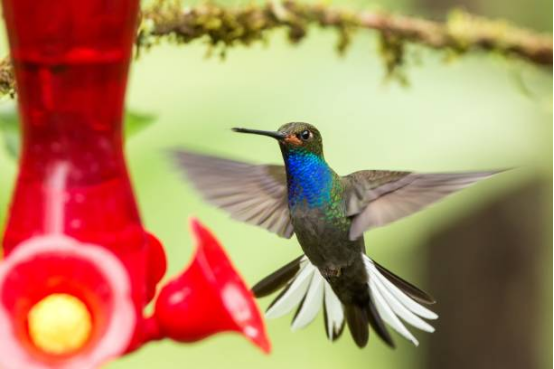
- Eye-catching colors: red or orange are most attractive to hummingbirds, and their visual sensitivity remains high even in winter.
Tip: Feeders with a base can reduce the amount of sugar water that spills and freezes and also make it easier for hummingbirds to stay.
Winter Hummingbird Feeder Sweet Soup Recipe and Precautions
Hummingbirds rely more on sugar water during the winter, so the sugar water recipe needs to be adjusted.
- Classic sugar syrup ratio: 1 part white sugar to 4 parts warm water, boil to dissolve, cool, and then pour into the feeder.
- Avoid adding honey, artificial sweeteners, and colorings, as these may mold or irritate hummingbirds at low temperatures.
- Supplement in small amounts frequently: Sugar water is prone to freezing, so feeding in small amounts frequently is more suitable for winter.
- Maintain temperature: You can place it in direct sunlight or use a winter insulation cover to prevent it from freezing.
Friendly reminder: Do not leave the sugar water in the cold wind overnight, as it may freeze into ice cubes, making it undrinkable for hummingbirds.
Winter Hummingbird Feeder Setup Tips
Properly arranging feeders can increase visitation rates and ensure the safety of hummingbirds.
1. Choose a sunny spot.
In winter, when sunlight is limited, placing the hummingbird feeder in direct sunlight can prevent it from freezing and increase the hummingbird’s comfort while it stays.
2. Provide shelter from the wind.
- Stay close to bushes or small branches to avoid being exposed to cold winds.
- Avoid open fields or windy areas, as hummingbirds may reduce their visits due to the cold.
3. Arrange rest stops for personnel.
- Small twigs or hooks serve as temporary resting points for hummingbirds.
- Their activity frequency decreases in winter, and resting places can increase their dependence on the yard.
4. Small quantity, multiple locations
- Multiple small hummingbird feeders are easier to manage than one large feeder.
- The sugar water is replenished promptly to reduce the risk of freezing.
Routine maintenance and safety
When feeding hummingbirds in winter, maintenance is especially important:
- Regular cleaning: Change the sugar water every 2–3 days and thoroughly clean the feeder weekly.
- Check the condition of the sugar syrup: promptly remove any sugar syrup that has frozen or become moldy.
- Observe hummingbird activity: record dwell time and number of visits, and adjust deployment strategies accordingly.
- Preventing interference from natural enemies: Cats, squirrels, and other predators may threaten the hummingbird’s safety, so care should be taken when setting up the enclosure.
Tip: Give the hummingbirds sugar water in the early morning or when the sun is at its brightest, and they will be more likely to spot you.
Winter Birdwatching Fun
Despite the low temperatures, feeding hummingbirds in winter has its own unique pleasures:
- Observe their struggle against the cold and their foraging activities.
- Feel the vitality of the courtyard in winter. Although the garden has little greenery, it is still full of life with the hummingbirds staying there.
- Documenting and photographing hummingbird activity in winter creates a unique nature journal for the family.
- You’ll find that even in cold weather, hummingbirds can still bring energy to a home.
Summarize
Feeding hummingbirds in winter can be challenging, but it’s entirely achievable with proper hummingbird feeder setup and sugar water management.
- Choose a small-capacity, cold-resistant, and easy-to-clean hummingbird feeder.
- Use classic sugar syrup recipes and avoid adding unsuitable substances.
- Set up a sunny, sheltered feeding area and provide a place for short stops.
- Regularly clean and check the sugar water, and record hummingbird activity to optimize strategies.
- Arrange them in multiple locations in small quantities to prevent icing and keep the hummingbirds active.
With the right methods, your winter yard or balcony can become a safe energy station for hummingbirds, allowing them to stay in your home and bringing a touch of life to the cold winter days.