Hummingbird Feeder: A Complete Guide to the Correct Ratio and Storage Methods of Homemade Honey

important, butIf you’re using a hummingbird feeder, you’ll soon discover that while
the feeder itself is important, what truly determines whether a hummingbird will stay is the nectar.
higher,Many beginners get stuck on the same question:
Is homemade honey any good?
Is a higher sweeter ratio always better?
Will it spoil if I make it in advance and store it?
the hummingbirdThese problems seem simple, but they are precisely the parts of hummingbird feeder that are most prone to errors and most easily overlooked.
methods, andThis article won’t be a “general discussion.”
We’ll break it down step by step, from the correct ratio, production details, storage methods, common misconceptions to practical maintenance experience, to tell you what kind of nectar is truly suitable for hummingbird feeders and is truly friendly to hummingbirds.
Table of Contents
Why does Hummingbird Feeder recommend homemade honey?
Among the top 10 related results on Google, there is a highly consistent conclusion:
what hummingbirds need is not a “complex recipe,” but a stable, near-natural energy source.
To put it more bluntly,
hummingbirds don’t need things that humans consider sophisticated.
Homemade honey is actually closer to natural honey.
The core components of natural nectar are very simple:
- sucrose
- water
The standard hummingbird feeder’s homemade nectar is based on this logic.
In comparison, some commercially available nectars:
- Adding artificial coloring
- Contains preservatives
- Complex composition but not very meaningful
From the perspective of hummingbird physiology, the simpler the structure, the lower the risk.
Hummingbird Feeder: The Only Correct Ratio for Homemade Honey
Here we give the conclusion directly, which is also the most crucial point of the entire article.
Standard ratio: 1:4 (white sugar: water)
That is to say:
- 1 part white sugar
- 4 parts water
This is the ratio that has been widely verified, used for a long time, and has the lowest risk.
Why not sweeter or thinner?
This is a question that many people ask.
1:3 or even sweeter
- Hummingbirds will be more “excited” in the short term.
- However, long-term use may increase metabolic burden.
- It is easier for crystals to crystallize and deteriorate at high temperatures.
1:5 or even rarer
- Declining attractiveness to hummingbirds
- Shortened stay
- Feeding efficiency decreased
A 1:4 ratio represents a balance between security, attractiveness, and stability.
The correct steps to make feeder nectar (many people are actually doing it wrong)
Even if the proportions are right, it doesn’t guarantee the nectar is safe.
The production process is equally important.
Step 1: Choose only the right sugar and water
This doesn’t need to be fancy.
Only white sugar can be used
Do not use:
- Honey (prone to fungal growth)
- Brown sugar, yellow sugar (containing impurities)
- Artificial sweeteners or sugar substitutes (which hummingbirds cannot metabolize)
Water-related aspects:
- Ordinary tap water can
- In areas with hard water, it is recommended to filter the water.
Step 2: Heat to dissolve, but don’t boil.
Here is a common misconception.
isThe correct approach is:
- Heat the water to near boiling.
- Add sugar
- Stir until completely dissolved
- Turn off the fire immediately
No need for long cooking time
or concentration
There are only two purposes for heating:
- Dissolves quickly
- Reduce initial microbial risk
Step 3: Pour the mixture into the feeder only after it has completely cooled.
Many people skip this step.
Pouring hot nectar directly into a hummingbird feeder may cause the following:
- Affecting the sealing structure
- shorten material life
- Internal condensation is generated
Make sure to wait until it reaches room temperature.
Why should red dye never be added to the nectar of Hummingbird Feeder?
There’s a reason why this issue is repeatedly emphasized in high-ranking content.
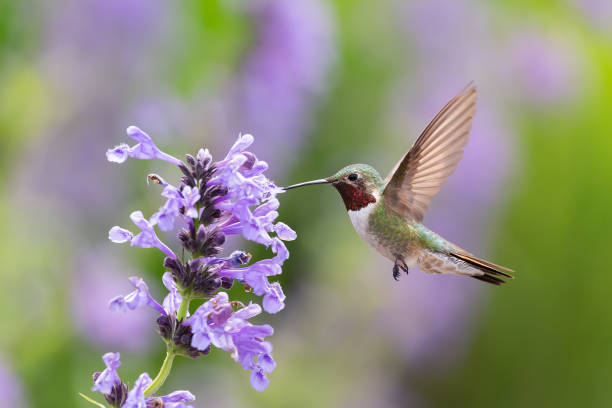
Hummingbirds are attracted to the color of the feeder, not the color of the nectar.
Most feeders already have red parts.
Hummingbirds do not rely on the color of nectar to determine food.
Artificial colorings:
- It has no nutritional value.
- May increase the burden on the liver of hummingbirds
- It’s also not friendly to hummingbird feeder materials.
The conclusion is very clear: no coloring was added.
Detailed Explanation of Homemade Honey Storage Methods from Hummingbird Feeder
wrong,”Many problems with nectar are not due to “doing it wrong”, but rather to storing it incorrectly.
Room temperature storage: Suitable for very short periods of time only
At room temperature:
It is recommended to use within 24 hours.
Even if it seems fine, it is not recommended to continue using it.
Refrigerated storage: the safest method
This is the most recommended approach.
Refrigeration temperature: ≤4℃
- Store in an airtight container
- 5–7 days at most
Before use:
- takeouttake out
- Place to near room temperature
- Then pour it into the hummingbird feeder.
Do not pour cold nectar directly.
Frozen storage: Suitable for people who make multiple batches at once
If you are used to batch production:
- Repackaged for single use.
- Frozen storage
- It is recommended to keep it within one month.
After thawing:
- Use only once
- Do not freeze repeatedly
The focus of nectar management differs depending on the season.
Summer high-temperature period (most critical)
- Change every 1–2 days
- Reduce the amount injected at one time
- Increase cleaning frequency
- High temperatures are the biggest enemy of nectar spoilage.
Spring and Autumn
- Replace every 3–4 days
- The capacity can be increased slightly.
Winter (if hummingbirds are still active in the area)
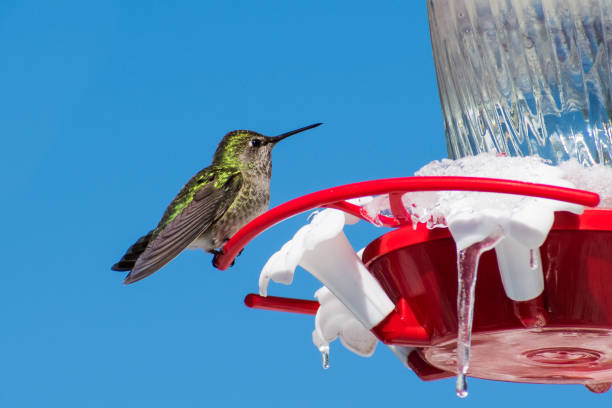
- Note the possibility of crystallization at low temperatures overnight.
- The feeder may be temporarily withdrawn if necessary.
- Avoid freezing nectar
Common but dangerous hummingbird feeder nectar misconceptions
These practices, while seemingly “thoughtful,” are actually very risky:
- Add vitamins to nectar
- If you think it “smells okay,” then continue using it.
- The nectar turned cloudy, but I couldn’t bear to throw it away.
Hummingbirds would rather have none than have unsafe nectar.
FAQ: Frequently Asked Questions about Homemade Honey from Hummingbird Feeder
Q1: Can honey be used instead of white sugar?
No. Honey ferments more easily, posing a health risk to hummingbirds.
Q2: My nectar has turned cloudy but has no odor. Can I still use it?
It’s not recommended. Cloudiness usually means that microorganisms have begun to multiply.
Q3: Can I prepare the honey a week in advance?
Yes, but it must be refrigerated and sealed.
Q4: Do different hummingbird species require different mixing ratios?
No. A 1:4 ratio is suitable for the vast majority of hummingbirds.
In summary, the core of the hummingbird feeder is actually the nectar itself.
No matter how good the feed is, if the nectar isn’t right, everything will be compromised.
The correct proportions, a clean production process, and proper storage methods
may seem like small things, but for hummingbirds, they represent the difference between safety and risk.
When you do a good job of making nectar, you will clearly feel:
- Hummingbirds arrive more consistently
- Longer stay
- Overall feeder maintenance also becomes easier.
And this is precisely the true meaning of the existence of the hummingbird feeder.